
Circular Liquid Fuel for Clean Waterborne Transport
IsoPROPEL enables zero-emission waterborne transport through a waste-free energy cycle using renewable isopropanol to power fuel cells.
IsoPROPEL Project
IsoPROPEL introduces a new paradigm by producing isopropanol as a renewable energy carrier.
IsoPROPEL is a 3,5-year project developing renewable isopropanol as a high-density and recyclable energy carrier to power zero-emission waterborne transport. Paired with direct liquid-fed isopropanol fuel cells, isopropanol enables a zero-emission, circular energy cycle, avoiding the storage safety, and emissions challenges of conventional fuels. Inland waterways provide the test case for this innovative solution, with both fuel production and fuel cell technologies validated at TRL4.
IsoPROPEL in figures
of the total project.
IsoPROPEL started at November 2025 and will run for 42 months.
3,995,636.25€
funding from the European Union in Horizon Europe program.
from 8 different countries.
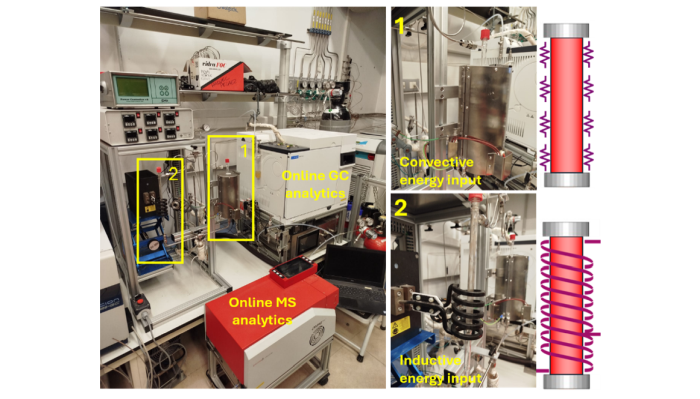
IsoPROPEL achieves first technical milestone with advanced CO₂ conversion platform
IsoPROPEL has successfully achieved its first technical milestone with the design, construction and commissioning of an advanced laboratory platform for CO2 conversion. Read more here.

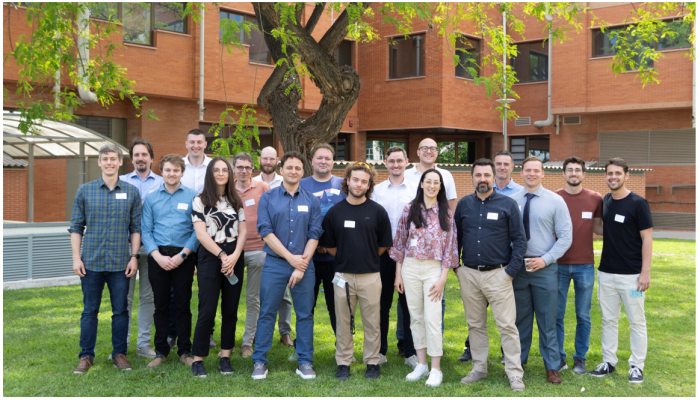
IsoPROPEL Partners

CSIC – Agencia Estatal Consejo Superior de Investigaciones Científicas

Helmholtz Institute Erlangen-Nürnberg for Renewable Energy

Centre national de la recherche scientifique – Laboratoire de Chimie

Politecnico di Milano
Expertise and Innovation Centre for Inland Barging

AVL GmbH

Institute for Energy Technology

University of Zagreb